

In a world where knowledge is power, the cracks in our education system are more visible than ever. Picture this: talented students unable to shine because they don’t have the same opportunities as their peers. Or teachers burning out faster than a candle at a birthday party. The current landscape of education is complex, with various issues piling up like assignments left undone. Whether it’s access to learning, curriculum concerns, teacher shortages, mental health struggles, or technology hurdles, the problems in education today demand our attention and clever solutions. Buckle up as we investigate into these challenges, one issue at a time.
Inequality In Access To Education
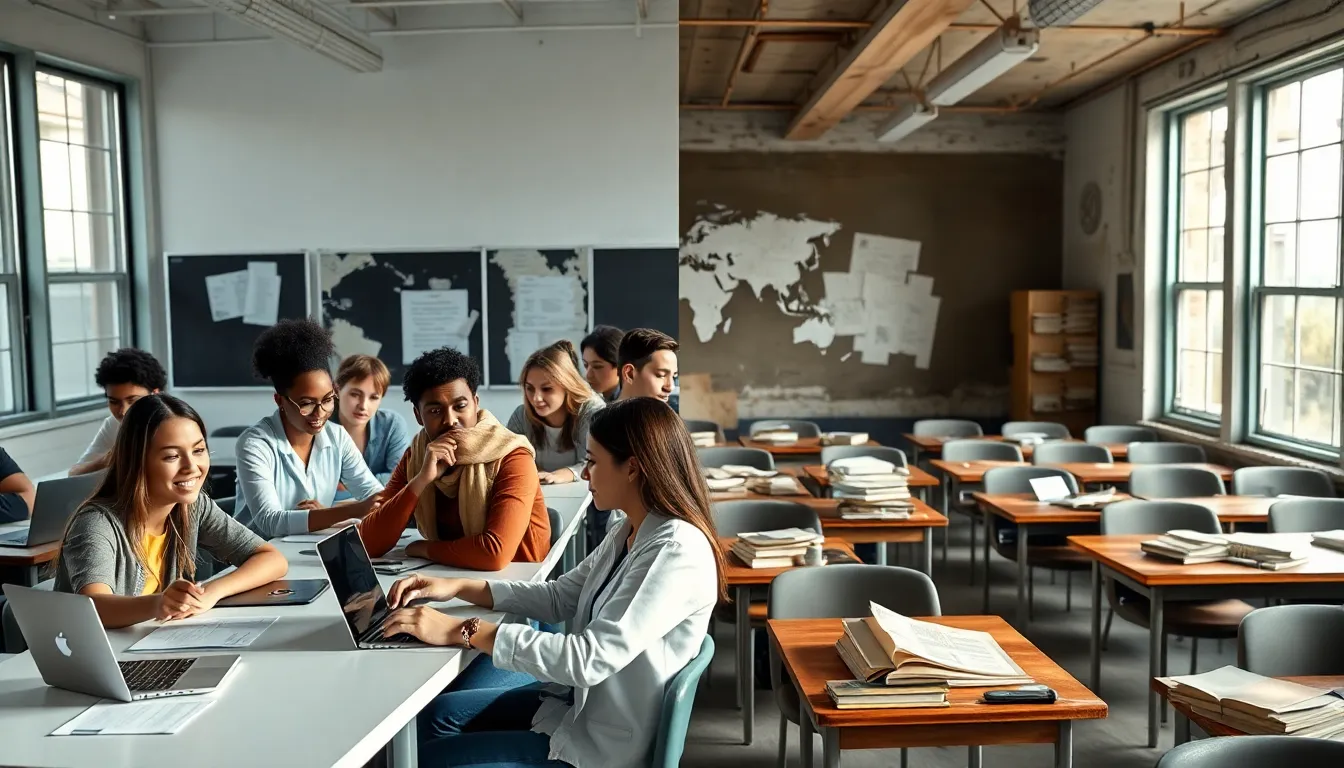
Funding Disparities Among Schools
Educational inequality often begins with funding. Schools in affluent neighborhoods receive far more financial support than those in poorer areas. This disparity leads to differences in facilities, resources, and extra-curricular activities, effectively creating an educational divide. In some districts, students have access to the latest technology and state-of-the-art classrooms, while their counterparts just a few miles away are working with outdated textbooks and crumbling infrastructure. It’s a recipe for a system that perpetuates inequality, making it hard for all students to achieve their full potential.
Impact Of Socioeconomic Status
Socioeconomic status serves as a shadow over education, influencing not just access but also engagement and achievement. Students from low-income families often face obstacles that hinder their ability to focus on studies. These could range from the stress of financial instability at home to inadequate support for learning. Even though having the ability, many talented students find themselves limited by circumstances outside their control. When education is reliant on parental income, it creates a cycle of poverty and educational failure that’s difficult to break.
Quality Of Education And Curriculum Issues
The Standardized Testing Dilemma
Standardized testing has become a staple in education, often viewed as a metric for success. But, is it truly an accurate reflection of student knowledge? Many argue that it promotes a narrow focus on rote memorization over deeper learning. The pressure to perform well on these tests can stifle creativity and discourage critical thinking. Students who are forced to prepare for exams often miss out on broader, more meaningful educational experiences that would help them think independently and innovatively.
Teaching To The Test vs. Critical Thinking
This leads us to an important tension: teaching to the test versus fostering critical thinking. Teachers often find themselves caught in the middle, pressured to ensure their students perform well on assessments rather than encouraging curiosity. The focus on grades can lead to a mechanical approach to education where students are trained to deliver the right answers rather than explore learning with vigor. After all, wouldn’t education be much richer if the aim were to develop thinkers, rather than mere test-takers?
Teacher Shortages And Retention Issues
Burnout And Job Satisfaction
During the chaotic years of remote learning, many educators experienced unbearable stress, leading to increased teacher burnout. It’s common for teachers to wear multiple hats, educator, counselor, and sometimes even a social worker, which strains their mental health and overall job satisfaction. With many teachers leaving the profession early, schools are struggling to fill vacancies, which only exacerbates the problem of maintaining quality education.
The Need For Professional Development
Also, the need for ongoing professional development cannot be understated. Many teachers desire growth opportunities that keep them engaged and improve their classroom skills. When professional development is neglected, teachers can feel stagnant and undervalued, leading to even more attrition. Providing strong support and resources can help alleviate some of their burdens and keep passionate educators in the field.
Mental Health And Student Well-Being
Increasing Pressure And Stress On Students
Today’s students are under immense pressure to excel academically, often leading to anxiety and stress. The quest for high grades and college admissions can overshadow their well-being. As they juggle assignments, extracurriculars, and a social life, many students report feeling overwhelmed. The critical question arises: how can we encourage academic success while also nurturing mental health?
Balancing Academic Demands And Mental Health
Balancing these demands can be a tall order. Schools need to prioritize mental health initiatives that foster resilience and emotional intelligence. This might include programs that teach stress management or promote mindfulness practices. After all, educated minds are not just about memorizing facts: they’re about developing well-rounded individuals capable of thriving in society.
The Role Of Technology In Education
Challenges Of Remote Learning
While technology has the potential to revolutionize education, it also comes with its share of challenges. Remote learning, for instance, highlighted numerous difficulties from lack of engagement to technological glitches. Not all students have access to high-speed internet or adequate devices, leading to significant disparities in learning experiences. Educators often find themselves struggling to adapt their teaching methods to online formats, complicating the quest for effective delivery.
Digital Divide And Access Issues
This brings us to the digital divide, a serious issue impacting education today. Many students, particularly those from lower socioeconomic backgrounds, face barriers that hinder their ability to participate in a tech-driven learning environment. Addressing this divide requires a comprehensive approach that includes community support and investment in resources, ensuring that technology enhances educational equity instead of widening the gap.


